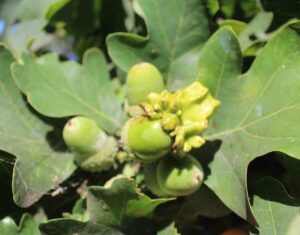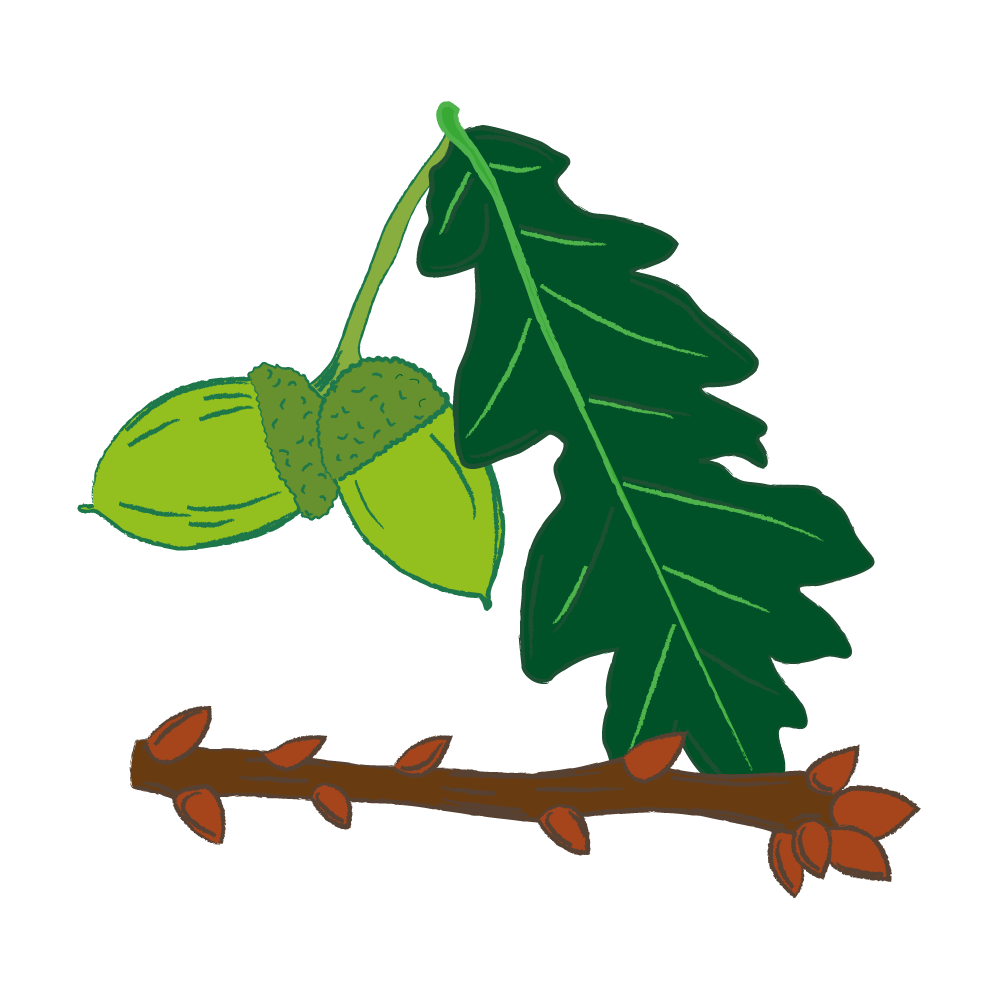
There are two native oak species in the UK. The most common in the English lowlands is the ‘Pedunculate’ oak, which is identified by having virtually no leaf stalk, whilst the acorns do have a short stalk. It prefers rich deep soils and in open positions can grow into a very large, spreading tree. (The ‘sessile’ oak, Quercus petraea, does have a long leaf stalk, but the acorns have no stalk. It also grows in Norfolk, but prefers poorer, acid soils.) Historically, oaks have perhaps been the most important UK source of timber for building, furniture making and many other uses – synonymous with strength and resilience. They can be very long-lived, with UK examples known to be over 1,000 years old!
Oak biodiversity
All oaks support a lot of other species (birds, bats, insects, fungi, bryophytes, and lichens). The introduction of the Turkey oak is believed to have brought a small wasp that lays its eggs in the leaf buds. Chemicals from the larvae cause the leaf to grow a small round ‘gall’ around the larvae that are generally known as ‘oak apples’. There are several types of gall wasp and the ‘apple’ varies in shape with the species. Other insects prey on the gall wasps – an intricate food web!