Cormorant
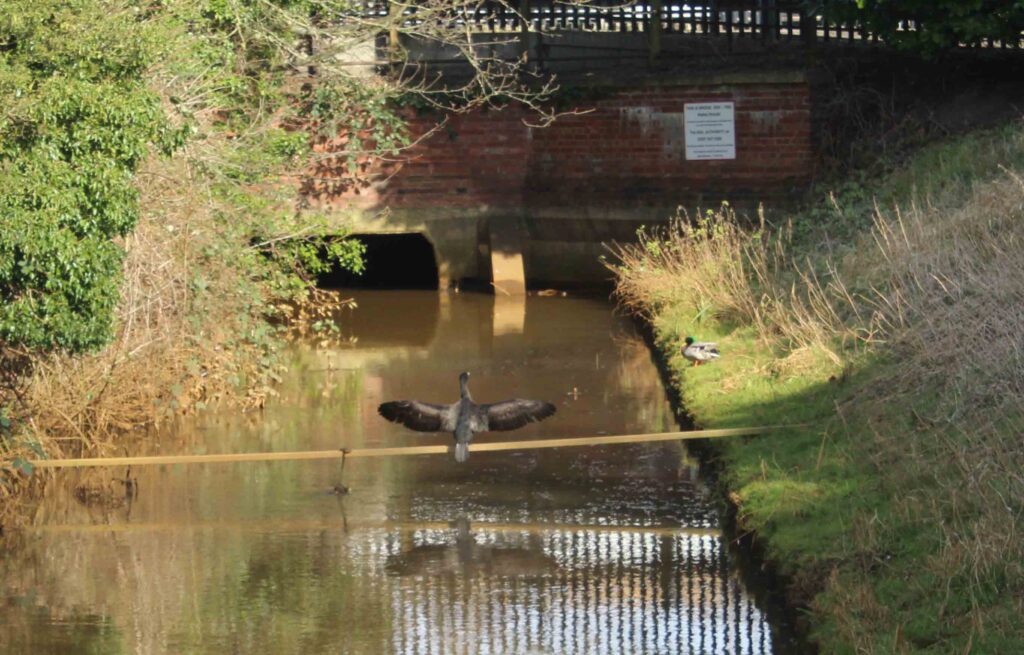
In the past, UK Cormorants tended to breed on coastal cliffs and offshore islands, but might visit inland rivers and lakes to feed in wintertime. Increasingly they now also breed at inland sites. (One theory is that the inland breeding birds are actually a sub-species that has spread from continental Europe.)
Cormorants are primarily fish eaters which they catch by diving and using their powerful back feet to propel themselves along. Successful fishing is a hard skill to learn. Young birds tend to need much more time than adults to feed themselves – and for the first few months of their lives the adults will also feed them. But by their first wintertime they are on their own (with shorter days and less time to fish). It is estimated that 90% of young birds perish before they are old enough to breed.
Cormorants, and their near relatives Shags, have specially adapted feathers that are ‘dense’ near the body and ‘loose’ at the outside. The outer ‘loose’ feather gets wet when they dive which helps reduce buoyancy. But they need to dry out when they have finished fishing to keep warm. That is why you see them spreading their wings in the sun!
Fungi
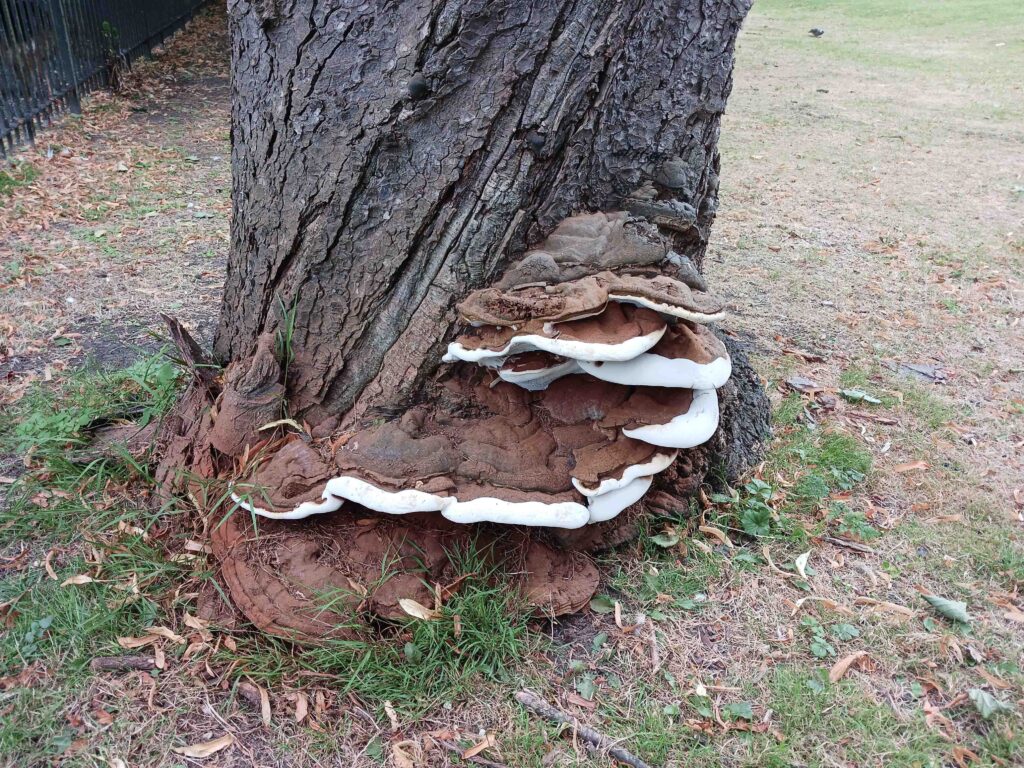
The Walks has a wonderful collection of trees, many of them known to have been there since the 19th century. Older trees often have prominent fungal brackets, which themselves can be very old. New research is establishing that fungi can be present in a tree throughout its entire life – sometimes even present in the original seed! Seeing fungi on a tree does not necessarily mean that the tree is dying or unsafe. Trees can live for many years with various different fungi present, often replacing decayed wood with new wood to maintain structural strength. However, if this equilibrium is upset (e.g. by physical damage to the tree from drought, flooding, insect infestation, or pruning of branches and roots), the tree may decline and decay fungi may then make the tree structurally unsound.
The species in the picture is probably Ganoderma australe which is a perennial fungus, growing a little larger every summer/autumn. The rusty coloured dust are the spores (reproductive cells) that are released annually and allow the fungus to colonise new sites with the aid of the wind and rain.
Indian Bean trees
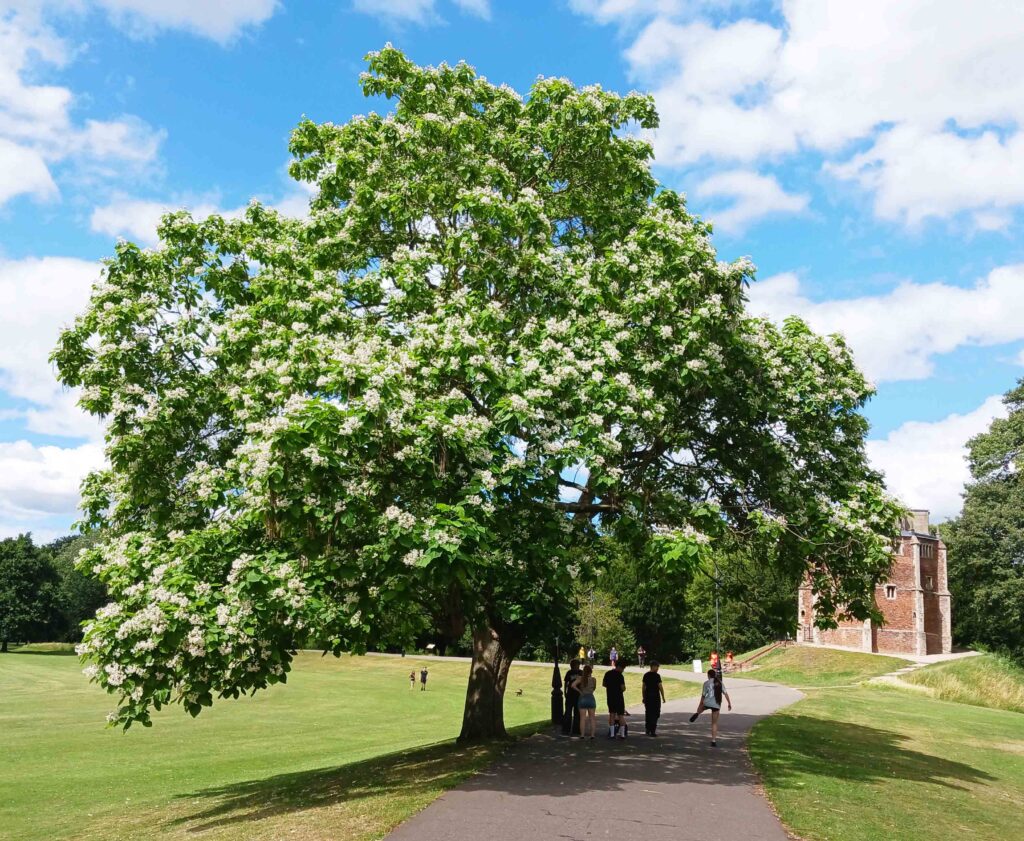
If you are in The Walks this week, it is worth stopping to admire the Indian Bean trees in flower (Catalpa bignonioides). They are not from India but the southern USA. Pick up a ‘Tree Trail’ leaflet and learn more about our excellent tree collection.

Mistletoe
In The Walks you can see an exceptional display of Mistletoe (Viscum album). It seems to grow mainly in the lime trees, although you can also see it in poplar, willow, maple and sorbus trees and traditionally it has been associated with apple orchards – mainly in the west of England. Nowadays it appears to be spreading across the UK and is becoming common in East Anglia.
One reason may be warmer wetter winters, but there may be other reasons. Mistletoe is generally spread by birds who eat the berries. Two key species are the Mistle Thrush (which, although numbers have been declining nationally, are resident in Lynn) and Blackcap (whose numbers have risen greatly in recent years). Additionally, Blackcaps used to migrate south in winter, but nowadays seem to be happy to reside here all year.
Mistletoe is a ‘hemi-parasitic’ plant – which means it uses photosynthesis to feed itself, but also draws water and nutrients from the host tree. Generally, there appears to be a happy balance in this relationship.
However, there is now some evidence that warm, wet winters are allowing Mistletoe to grow unchecked to the extent that it can weaken or kill the host. Apple farmers in Herefordshire have been reporting this, although other factors may also be at work. (Tree species can be stressed by drought summers or wet winters, but perhaps Mistletoe is coping better with these changes?) Heavy Mistletoe growth may also lead to trees being physically damaged in wind.
There is certainly evidence that the lime trees with mistletoe along Tennyson Avenue are declining in health and may need replacing in coming years.