
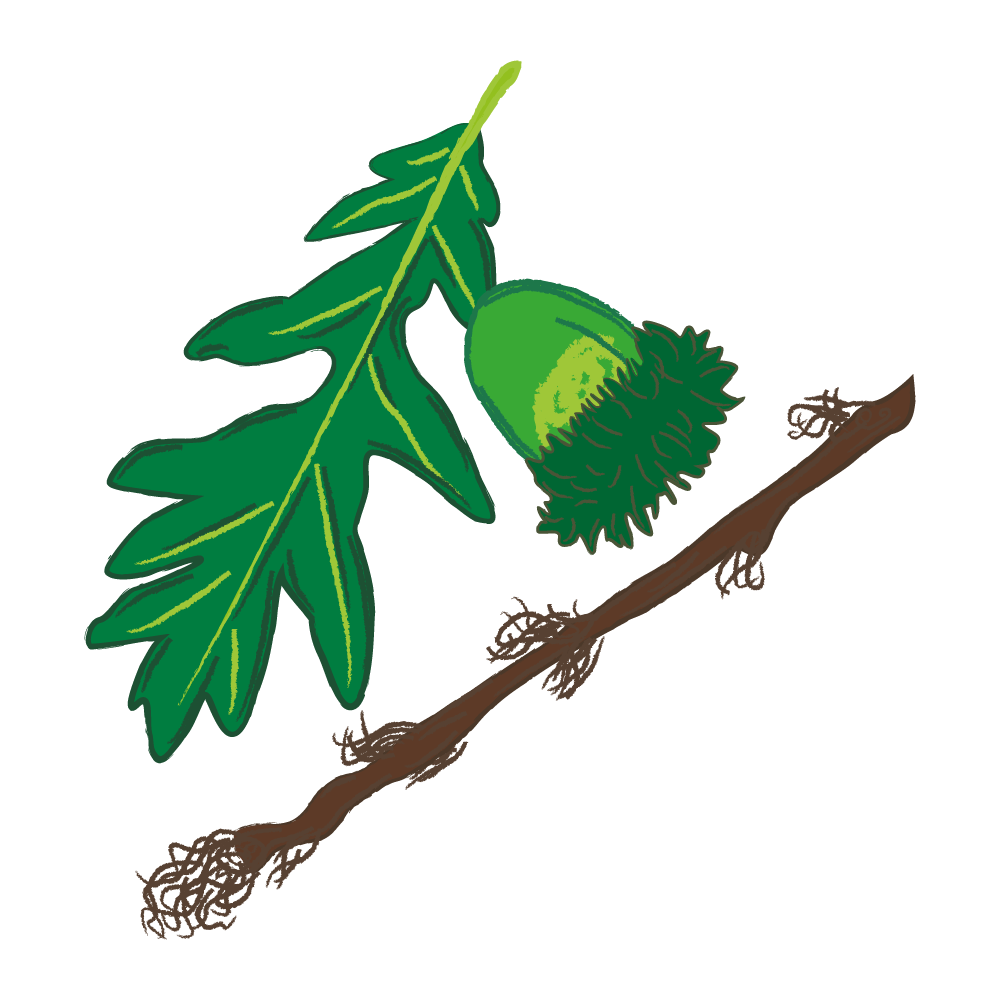
This oak was introduced to the UK from eastern Europe in the 17th century. It is fast growing and resilient and there are several excellent specimens in The Walks. The foliage is notably dark green, leaves shiny and often with an angular ‘cut leaf’ form. Acorns are stalkless and the cup has notable ‘whiskers’. Some Q. cerris are said to be semi-evergreen (keeping some leaves all year), but apparently not the specimens in The Walks. Perhaps this will change with warmer winters?
Oak biodiversity
All oaks support a lot of other species (birds, bats, insects, fungi, bryophytes, and lichens). The introduction of the Turkey oak is believed to have brought a small wasp that lays its eggs in the leaf buds. Chemicals from the larvae cause the leaf to grow a small round ‘gall’ around the larvae that are generally known as ‘oak apples’. There are several types of gall wasp and the ‘apple’ varies in shape with the species. Other insects prey on the gall wasps – an intricate food web!